

Why Emotional Needs Can Feel Morally Wrong After Religious Trauma
There is a particular kind of confusion that many people experience after leaving a high-control or rigid religious environment. It often shows up quietly, in small moments. You might notice it when you feel the urge to ask your partner for reassurance, but something inside you says you shouldn’t. Or when you feel lonely and want comfort, but another voice whispers that needing too much is selfish. Or when you feel anger or sadness and immediately wonder if you are somehow failing morally. For many people healing from religious trauma, emotional needs do not just feel vulnerable—they can feel wrong.
Not inconvenient. Not difficult.
Wrong.
And that experience can be deeply disorienting.
Because emotional needs are part of being human. Yet after certain kinds of religious experiences, those needs may have been reframed as weakness, selfishness, sin, or a lack of faith. Over time, the nervous system learns something powerful: needing others is dangerous. Understanding why this happens and learning to recognize emotional needs as human rather than moral failures is often an important step in religious trauma therapy in St. Paul, MN.
When Human Needs Become Moral Issues

In healthy emotional development, children learn that their needs matter. They learn that it is safe to reach for comfort when they are scared. They learn that anger can signal a boundary that needs protection. They learn that sadness can invite care and connection.
But in some religious environments, normal emotional experiences become moralized. A religious trauma therapist understands this split and can hold space for the confusion of carrying both gratitude and grief for the same system.
Fear might be labeled a lack of trust in God. Anger might be interpreted as rebellion or bitterness. Sadness might be framed as spiritual weakness. Loneliness might be treated as a failure to rely on faith. Instead of emotions being signals from the body and mind, they become spiritual tests. This can create a painful split inside a person. On one side are natural emotional needs—connection, reassurance, safety, belonging. On the other side are internalized messages that say those needs reflect spiritual failure.
Many people grow up trying to resolve this tension by suppressing their feelings. They learn to pray instead of asking for comfort. They learn to confess emotions instead of exploring them. They learn to override their inner signals. Over time, this can lead to a deep sense that emotional needs themselves are morally suspicious.
The Nervous System Learns the Rules
Religious trauma does not only affect beliefs. It also affects the body. The nervous system is constantly learning what is safe and what is not. When emotional expression leads to criticism, correction, or spiritual shame, the body adapts. A child who is told that anger is sinful may learn to shut down anger entirely. A teenager who is told that questioning authority reflects rebellion may learn to silence curiosity. An adult who is taught that personal needs are selfish may learn to minimize their own experience. These adaptations are not weaknesses. They are survival strategies. A religious trauma therapist recognizes these adaptations as wisdom, not weakness - your body learning what it needed to survive.
But later in life, they can make relationships complicated. Someone may deeply love their partner, yet feel intense anxiety when asking for reassurance. They may crave emotional closeness but feel shame when expressing vulnerability. They may struggle to communicate needs without feeling like they are doing something morally wrong.
From the outside, this can look like distance or avoidance.
From the inside, it often feels like a quiet battle between longing and shame.
Why Relationships Can Feel So Complicated
In religious trauma couples therapy, this dynamic appears more often than people expect. One partner might say, “I just want to know that you care when I’m struggling.” But the other partner may hear something very different. They may hear criticism. Or pressure. Or an accusation that they are failing.
If someone grew up in an environment where emotional needs were tied to moral judgment, requests for connection can feel loaded with meaning. This is something attachment researcher Sue Johnson often spoke about. At the core of most relationship conflict are simple emotional questions:
Are you there for me?
Do I matter to you?
Will you respond when I reach for you?
But if reaching for someone has historically led to shame or correction, the nervous system may treat that moment as dangerous. The result is often a painful cycle.
One partner reaches for connection. The other partner feels overwhelmed or morally threatened. They withdraw or defend themselves. Both people feel more alone.
Without understanding the deeper roots, couples can misinterpret each other’s reactions.
The Legacy of Moral Perfectionism
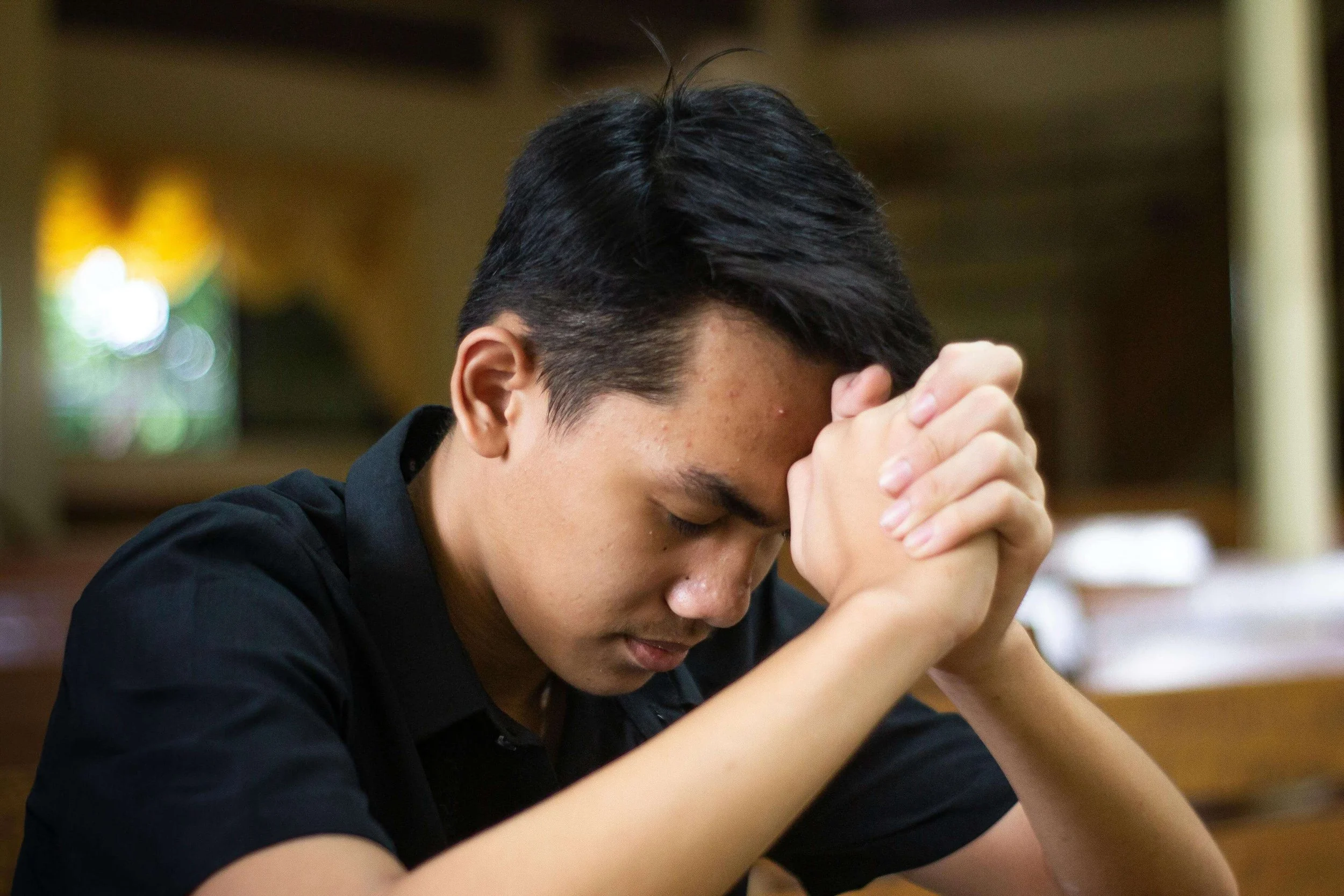
Another layer that often appears after religious trauma is moral perfectionism. Many people were taught that goodness requires constant self-monitoring. Thoughts, feelings, and behaviors were evaluated through a moral lens.
Was that emotion selfish?
Was that thought sinful?
Was that desire pure enough?
Living under this kind of scrutiny can create a deep habit of self-surveillance. Instead of asking, What am I feeling right now? people learn to ask, Is it okay to feel this? Over time, emotional life becomes filtered through judgment. Even years after leaving a religious system, the inner critic can remain active.
You may notice thoughts like:
“I shouldn’t feel this way.”
“I’m being too needy.”
“I’m asking for too much.”
“I should just handle this on my own.”
These voices are often echoes of earlier environments where emotional needs were evaluated morally instead of relationally.
Relearning the Language of Emotion
Healing from religious trauma often involves learning a new relationship with emotions. This process can feel surprisingly unfamiliar. Many people were never taught that emotions carry useful information. Instead, they were taught to control or eliminate them. In religious trauma therapy in St. Paul, one of the first steps is often simply slowing down enough to notice what is happening inside.
What does sadness feel like in the body?
What happens in the chest when loneliness appears?
Where does anger show up physically?
These questions help reconnect emotional experience with the body instead of with moral judgment. Gradually, people begin to rediscover something important: Emotions are not moral failures. They are signals.
Anger can signal that a boundary has been crossed.
Sadness can signal a need for comfort or support.
Fear can signal the desire for safety and reassurance.
When emotions are allowed to exist without judgment, they become guides rather than enemies.
Learning That Needs Belong in Relationships
Perhaps the most profound shift after religious trauma is learning that emotional needs belong in relationships. Healthy relationships are not built on perfect independence. They are built on mutual care.
Stan Tatkin, a well-known couples therapist, often talks about the importance of partners becoming a reliable “secure base” for each other. In healthy partnerships, people are not expected to handle everything alone. They are allowed to lean on each other. For someone who was taught that needing others reflects weakness or spiritual immaturity, this can feel radically new.
It may take time to believe that it is okay to ask:
“Can you sit with me for a minute?”
“I’m feeling overwhelmed today.”
“I could really use some reassurance.”
These requests are not moral failures. They are invitations to connection.

A Different Way Forward
Recovering from religious trauma is not about rejecting spirituality or faith entirely. For some people, it may involve reconstructing those beliefs in healthier ways. For others, it may involve stepping away from religion altogether.
But for many people, the deeper work involves reclaiming their emotional humanity.
Learning that needs are not sins.
Learning that feelings are not moral defects.
Learning that vulnerability is not weakness.
It is simply part of being human.
And when emotional needs are no longer treated as moral problems, something powerful begins to happen. People soften toward themselves. Relationships become safer places to show up honestly. And the nervous system slowly learns a new truth: Connection does not require perfection. It only requires the courage to be real.
CAN RELIGIOUS TRAUMA THERAPY IN ST. PAUL, MN, HELP YOU STOP TREATING EMOTIONAL NEEDS AS MORAL FAILURES?
When the religious system you grew up in taught you that needing comfort meant lacking faith, that anger was sinful, and that sadness reflected spiritual weakness, emotional needs stop feeling vulnerable and start feeling wrong. For many people healing from religious trauma, this can show up as an inability to ask for reassurance without apologizing, suppressing loneliness because needing connection feels selfish, or immediately questioning whether you're morally defective when normal emotions arise. These patterns aren't signs that you're spiritually broken or emotionally deficient; they're protective responses shaped by environments where feelings were moralized, where emotional expression led to correction or shame, and where your inner signals were treated as evidence of failure. At NobleTree Therapy, our religious trauma therapists in St. Paul & throughout Minnesota hold space for you to untangle emotional needs from moral judgment—so you can learn to recognize feelings as signals instead of sins, trust your body's responses without shame, and reclaim permission to need care, comfort, and connection as part of being human.
Let's connect—schedule a free consultation
Learn more about religious trauma therapy at NobleTree
Your emotional needs were never moral failures. Sometimes, learning to believe that is the work.
OTHER THERAPY SERVICES OFFERED AT NOBLETREE THERAPY IN ST. PAUL, MN
At NobleTree Therapy, we support individuals, couples, and families across Minnesota as they navigate the tender, transformative work of reclaiming emotional life after religious systems that moralized feelings. For some, this means unlearning the belief that needing reassurance reflects weak faith; for others, it means tending to the shame that activates in the body when vulnerability arises, or finding steadiness while rebuilding relationships that were shaped by moral perfectionism and self-surveillance.
In addition to religious trauma therapy in St. Paul, MN, our practice offers LGBTQIA+ affirming care, somatic couples therapy, identity development, and space for the grief that emerges when you realize you spent years suppressing emotions instead of learning what they meant. We also walk alongside those learning to express anger without believing it's sinful, ask for comfort without feeling selfish, and stay present with sadness without treating it as spiritual failure—as part of their healing journey.
This work doesn't follow a formula. It's a relational process grounded in what your nervous system needs, what your body is telling you, and the slow restoration of permission to feel without judgment.
ABOUT THE AUTHOR

Kendra Snyder, MA, LMFT, NCC (she/her) is the founder of NobleTree Therapy and a licensed trauma therapist serving Minnesota and Colorado. Her work is deeply informed by an understanding of how systems that moralize emotions—whether religious, cultural, or familial—can shape a person's capacity to recognize needs as human rather than spiritual tests, to trust feelings as information instead of evidence of failure, or to acknowledge that wanting connection doesn't make you weak or faithless. For over a decade, she has supported individuals and couples navigating the discomfort of realizing that their emotional needs were never the problem, and that healing means building new frameworks where anger, sadness, fear, and longing are allowed to exist without moral surveillance.
Kendra's approach is somatic, depth-oriented, and relational, with a particular focus on how the moralization of emotions becomes embedded in the nervous system and carried into adult life and relationships. In her religious trauma therapy in St. Paul, MN, she helps people recognize when the urge to suppress feelings or apologize for needing care is actually a protection against the vulnerability of being seen as morally inadequate, and how to gently practice allowing emotional needs without collapsing into shame. At the heart of her work is a commitment to helping people move out of the belief that emotions are moral failures and into lives that feel honest, embodied, and spacious enough to hold the truth that needing reassurance, comfort, and support is part of being human—not evidence of spiritual deficiency.