

How Do I Raise Kids Without the Fear I Was Raised With? Religious Trauma Therapy in St. Paul for Parents
There is a particular kind of heartbreak that can emerge when you become a parent after surviving religious trauma.
Sometimes it arrives quietly.
You are rocking your child to sleep when you suddenly hear the voice of your childhood pastor in your mind warning about rebellion, sin, or “worldliness.” You watch your child cry after making a mistake and feel a wave of panic rise in your chest that seems far larger than the moment itself. You notice yourself wanting immediate obedience, not because you want control, but because somewhere deep in your nervous system, disobedience still feels dangerous. Religious trauma therapy in St. Paul, MN, can help you understand why parenting activates these old responses and begin untangling fear from care.
Other times, it arrives all at once.
You hear your child ask an innocent question about bodies, identity, doubt, or God, and suddenly you are no longer fully in the present. You are twelve years old again. Fifteen. Nineteen. Sitting in a church pew, youth group circle, or family dinner where curiosity was treated as defiance, emotions were treated as weakness, and fear was called love. A religious trauma therapist understands that these moments aren't just memories. They're your body remembering what happened when you asked questions, and trying to protect your child from the same harm.

Many Parents Carrying Religious Trauma Desperately Want to Raise Their Children Differently.
They want homes rooted in safety rather than shame. They want connection instead of control. They want their children to trust themselves, trust their bodies, trust their emotions, and feel fundamentally worthy without having to earn that worth through obedience or perfection.
And yet, many parents also discover something deeply disorienting:
Even when you consciously reject the fear-based systems you were raised in, your body may still react as though those systems are true.
This is one of the painful realities of trauma. Insight alone does not always quiet the nervous system.
You May Know Intellectually That Your Child Asking Questions is Healthy.
But your chest still tightens. You may believe children deserve autonomy and emotional expression, but feel overwhelmed when emotions become loud, messy, or unpredictable. You may deeply value LGBTQIA+ affirmation while still noticing old reflexes of fear, hypervigilance, or internal conflict rise inside you because those messages were wired into you long before you had language to challenge them.
This does not make you a bad parent.
It makes you a parent whose nervous system was shaped inside environments where fear was often confused for morality, safety, holiness, or love.
Religious trauma therapy can help untangle that.
When Parenting Activates Old Survival Responses
One of the most confusing parts of parenting after religious trauma is realizing that children often activate the exact developmental wounds you were never allowed to process.
Children are naturally emotional, curious, embodied, dependent, loud, imaginative, questioning, impulsive, and deeply attuned to relational safety. In healthy environments, these traits are welcomed as part of development.
But in high-control religious systems, many of those same traits were punished or feared.
You may have learned:
Emotions are dangerous.
Anger is disrespectful.
Curiosity is rebellion.
The body is sinful.
Obedience matters more than authenticity.
Doubt means moral failure.
Parents must maintain authority at all costs.
Fear keeps people “safe.”
Love must be earned through goodness.
These Messages Do Not Simply Disappear Because You Leave the Environment.
As trauma therapist Bessel van der Kolk has written, “the body keeps the score.” Trauma is not only cognitive memory. It becomes physiological patterning. It lives in the nervous system, muscles, attachment responses, and survival instincts.
So when your child pushes boundaries, melts down, expresses identity, or challenges rules, your body may react as though catastrophe is near, even when your conscious mind knows otherwise.
This is often where parents begin feeling profound shame.
They think:
“I left that system. Why am I still reacting this way?”
Because healing is not simply about changing beliefs. It is also about helping the body learn that safety, connection, and love do not require fear.
The Difference Between Guidance and Fear
Many parents healing from religious trauma struggle to know what healthy parenting even looks like because fear-based systems often framed themselves as loving, protective, or moral (Focus on the Family, anyone?).
This creates enormous confusion later.
You may ask yourself:
If I do not use fear, will my child become selfish?
If I validate emotions, am I being permissive?
If I allow questions, am I failing to guide them?
If I support my child’s identity exploration, am I abandoning structure?
If I stop controlling everything, will things fall apart?
These fears make sense when you were raised to believe fear was necessary for goodness.
But developmental psychology and attachment research consistently show that long-term emotional health is not built through chronic fear. It is built through secure attachment, emotional attunement, repair, consistency, and relational safety.
Attachment Researcher Dan Siegel Speaks About the Importance of Helping Children Feel “Felt.”
Children do not develop resilience because they never experience struggle. They develop resilience because they experience struggle while remaining connected to safe relationships.
Similarly, emotionally focused therapy pioneer Sue Johnson emphasized that human beings are wired for connection. Safety inside relationships changes how the nervous system organizes itself.
Fear can create compliance.
But connection creates integration.
One produces hypervigilance. The other produces security.
One teaches children to monitor themselves constantly to avoid punishment or rejection.
The other teaches children that they can remain connected even when imperfect, emotional, uncertain, or struggling.
That difference matters deeply.
The Grief of Parenting Differently
There is another layer to this work that often goes unnamed:
Parenting differently may force you to finally see how much fear shaped your own childhood.
Many parents find themselves unexpectedly grieving while raising their children.
You hold your crying child gently and realize no one held you that way.
You apologize after losing patience and realize no adult ever apologized to you.
You encourage curiosity and suddenly understand how profoundly alone you felt when your own questions were silenced.
You watch your child move freely through the world and realize how much of yourself you had to suppress in order to survive.
This grief can feel enormous because parenting creates continual developmental mirrors. Your child reaches the ages you once were, and your nervous system remembers.
Trauma therapist Gabor Maté often writes about how trauma is not only what happened to us, but what happened inside us as a result of what happened around us. Parenting can illuminate those internal adaptations with painful clarity.
Many parents feel guilt for grieving while raising children they deeply love. But grief is not evidence that you are failing. Often, it is evidence that your nervous system is finally safe enough to feel what had to remain buried for survival.
Breaking Cycles Does Not Mean Parenting Perfectly
Many survivors of religious trauma carry intense pressure to “get parenting right.”
This is understandable.
When you know firsthand how deeply fear can wound a child, it can create enormous anxiety about repeating harm.
But perfectionism itself is often part of the trauma.
High-control systems frequently condition people to believe mistakes are catastrophic. This creates black-and-white thinking in parenting:
Either I am healing the cycle or repeating it.
Either I am emotionally attuned or damaging my child.
Either I respond perfectly or I fail.
But healthy parenting is not built on perfection.
In Fact, Attachment Research Shows that Repair Matters More than Flawless Attunement.
Psychologist Donald Winnicott introduced the idea of the “good enough parent.” Children do not need perfection. They need caregivers who are responsive, relationally engaged, and willing to repair ruptures when they occur.
This can feel radically different for survivors of fear-based systems.
In many religious environments, mistakes were met with shame, punishment, or withdrawal of connection. But healthy relationships allow for rupture and repair without abandonment.
That means healing parenting often sounds like:
“I got overwhelmed earlier and raised my voice. I’m sorry.”
“Your feelings make sense.”
“You are not bad for having emotions.”
“We can disagree and still stay connected.”
“I love you even when things are hard.”
“You do not have to earn closeness with me.”
For many survivors, saying these things to children can feel emotionally overwhelming because they are also the words your younger self needed desperately.
When Fear Was Spiritualized
One of the unique complexities of religious trauma is that fear was often framed as sacred.
Fear was not merely presented as practical discipline.
It was moralized.
You may have been taught to fear:
Hell
Divine punishment
Demonic influence
Sexuality
Queerness
Secular culture
Your own thoughts
Your own body
Making mistakes
Authority figures
Being “deceived”
Getting things wrong spiritually
Disappointing God

For Many Parents, Remnants of These Fears Emerge Unexpectedly When Raising Children.
You may notice panic around your child’s autonomy, identity development, media exposure, friendships, or questions. Not because you consciously believe the old teachings fully, but because the nervous system learned that deviation from the system threatened belonging, safety, or eternal consequences.
Research on adverse religious experiences increasingly shows that chronic fear-based spiritual environments can contribute to anxiety, shame, attachment disruptions, dissociation, and nervous system dysregulation. High-control religious systems shape identity development and relational safety.
Children raised inside chronic fear often become highly externally oriented. They learn to monitor authority figures, suppress internal instincts, disconnect from embodied knowing, and prioritize compliance over authenticity.
Many parents in religious trauma therapy are trying to rebuild something profoundly important:
The ability to trust themselves while helping their children trust themselves too.
Raising Children With Consent, Autonomy, and Emotional Safety
One of the most powerful aspects of healing religious trauma as a parent is learning that authority and safety are not opposites.
Many survivors were raised in environments where authority relied on fear, hierarchy, control, and unquestioned obedience. This can create confusion about how to parent without replicating domination dynamics.
But healthy parenting is not the absence of boundaries.
It is the presence of relational safety within boundaries.
Children still need structure, guidance, accountability, and containment. But these can emerge through connection rather than fear.
This often includes helping children develop:
Emotional literacy
Instead of teaching children to suppress emotions, parents can help children identify, understand, and regulate feelings.
Bodily autonomy
Children learn they are allowed to have boundaries around touch, privacy, and consent.
Critical thinking
Questions are not punished. Curiosity is welcomed.
Secure attachment
Children learn that conflict does not automatically threaten connection.
Identity safety
Children experience dignity regardless of gender expression, sexuality, neurodivergence, or emotional temperament.
Internal trust
Instead of outsourcing morality entirely to external authority, children develop internal values, empathy, reflection, and self-awareness.
This kind of parenting can feel both beautiful and terrifying for survivors of high-control systems because it often requires tolerating uncertainty.
And uncertainty may have once felt profoundly unsafe.
The Nervous System Work of Parenting
Many people approach healing intellectually first. They read books, deconstruct theology, listen to podcasts, and develop new frameworks. These things can be deeply meaningful and important.
But parenting often reveals where the body still carries fear.
You may notice:
Panic when your child is dysregulated
Hypervigilance around behavior
Difficulty tolerating mess, noise, or unpredictability
Emotional shutdown during conflict
Overexplaining rules out of anxiety
Fear of losing authority
Difficulty apologizing
Guilt after setting boundaries
Feeling emotionally flooded by children’s needs
Deep anxiety around your child rejecting your beliefs or values someday
This is Where Somatic and Trauma-Informed Therapy Can Become Especially Important.
Therapies that incorporate nervous system awareness, attachment repair, and embodied processing help people move beyond purely cognitive insight.
Approaches such as EMDR, somatic therapy, Internal Family Systems (IFS), emotionally focused therapy, and attachment-focused trauma work can help survivors understand not only what they believe differently now, but why their bodies still react with fear.
IFS founder Richard Schwartz speaks about protective parts of the self that emerge to keep us safe. Many parents notice protective parts activated constantly in parenting: controlling parts, anxious parts, perfectionistic parts, hypervigilant parts, emotionally avoidant parts.
These parts are not “bad.”
They are adaptive responses that developed in environments where safety felt conditional.
Healing involves meeting those protective responses with compassion rather than shame.
Parenting Without Certainty
One of the hardest transitions for many survivors of religious trauma is learning to tolerate ambiguity while parenting.
High-control systems often offer certainty as a form of emotional regulation.
There are clear rules.
Clear roles.
Clear answers.
Clear categories.
Clear authority structures.
Leaving those systems can feel destabilizing because uncertainty itself may trigger anxiety.
And parenting naturally contains enormous uncertainty.
You cannot fully control who your child becomes.
You cannot prevent all pain.
You cannot guarantee outcomes.
You cannot create perfect safety.
For many survivors, this uncertainty can feel unbearable at times because they were taught that good parenting meant controlling outcomes.
But healthy parenting is not the elimination of uncertainty.
It is the ability to remain relationally grounded inside uncertainty.
This May Mean Learning:
to stay connected during disagreement
to tolerate children having different perspectives
to allow developmental exploration
to support identity formation without panic
to regulate yourself without rigid control
to trust connection more than fear
This work is incredibly vulnerable because it often requires grieving the illusion of certainty itself.
The Fear of Passing Trauma Forward
Many parents healing from religious trauma carry quiet terror that they will inevitably pass trauma onto their children.
And the truth is: all parents impact their children imperfectly because all humans are imperfect.
But awareness changes things.
Parents who are willing to reflect, repair, remain curious, and seek healing are already interrupting cycles in meaningful ways.
Research consistently shows that reflective functioning — the ability to think about emotions, attachment, and relational dynamics — significantly impacts intergenerational healing.
In other words, the fact that you are asking these questions matters deeply.
The parent who says:
“I want to understand my reactions.”
“I want my child to feel safe.”
“I want to break cycles of shame and fear.”
is already doing something profoundly different from systems that demanded unquestioned certainty and denied harm altogether.
Healing does not erase every rupture, but it transforms how ruptures are navigated.
Religious Trauma Therapy for Parents in St. Paul
In religious trauma therapy, many parents begin untangling the layers beneath their reactions.
Not just the parenting moments themselves, but the older stories underneath them.
The child who learned love could disappear.
The teenager who learned authenticity threatened belonging.
The young adult who learned their body was dangerous.
The parent who now feels flooded trying to raise children differently while carrying unresolved fear in their nervous system.
Religious Trauma Therapy Often Involves:
understanding how high-control systems shaped attachment
exploring shame and perfectionism
rebuilding self-trust
processing grief and anger
developing nervous system regulation
learning embodied boundaries
reconnecting with intuition and internal knowing
healing relationships with emotion, identity, and autonomy
practicing repair rather than perfection
creating parenting values rooted in connection instead of fear
For many parents in St. Paul and the greater Minneapolis area, this work is not simply about leaving harmful beliefs behind. It is about creating an entirely different relational legacy. One where children do not have to disconnect from themselves in order to stay loved.
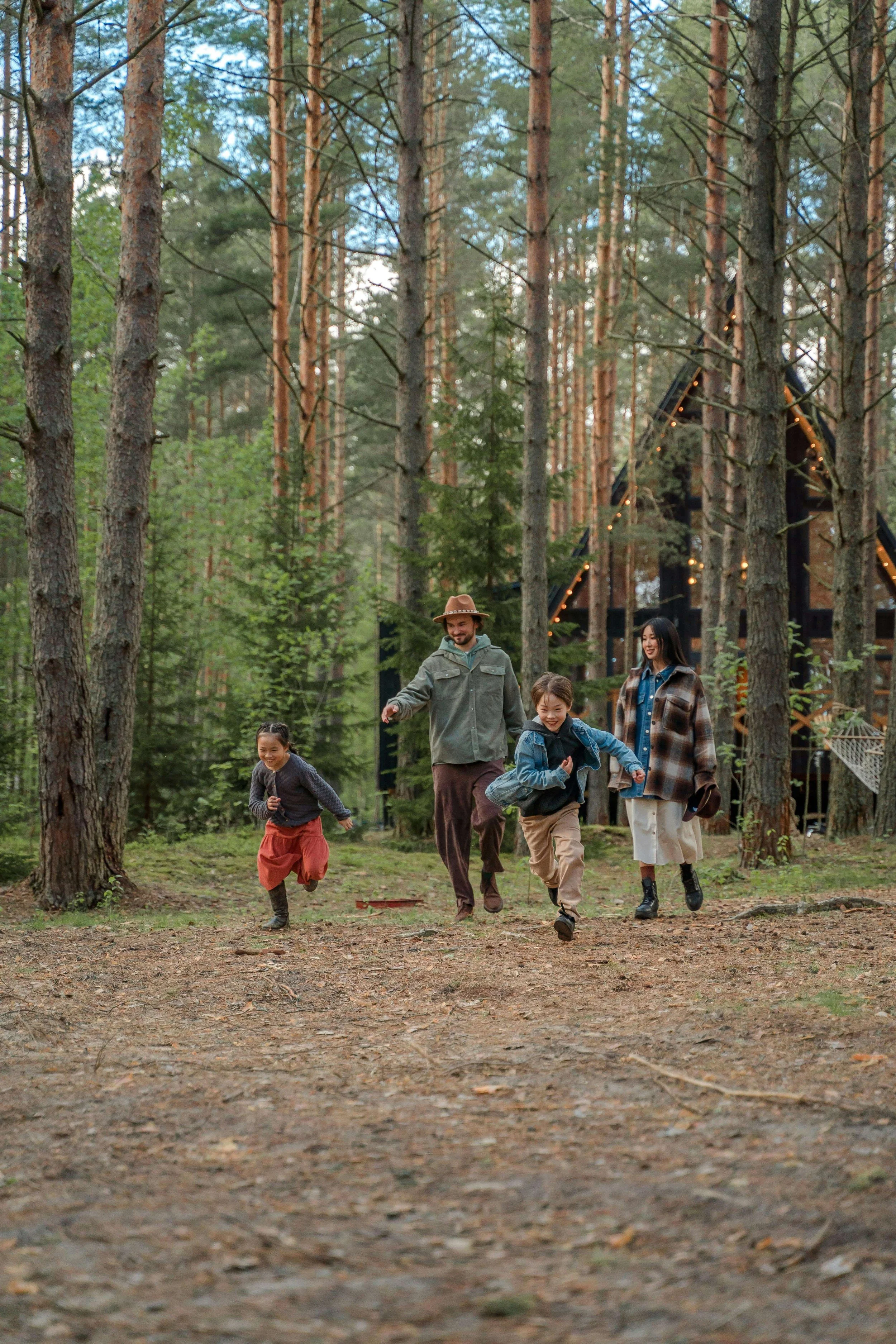
You Are Allowed to Build Something Different
Sometimes survivors worry that because fear shaped part of their parenting, they have already failed.
But healing is not measured by whether fear ever appears.
Healing is measured by what happens when it does.
Do you become curious?
Can you pause?
Can you repair?
Can you seek support?
Can you notice when old survival responses are driving the moment?
Can you choose connection, even imperfectly?
That Matters.
Children do not need parents who never feel fear.
They need parents who are willing to remain human without turning fear into domination, shame, or disconnection.
And perhaps one of the most healing things of all is this:
Your child does not need you to be untouched by trauma in order to experience love, safety, and attunement. They need you willing to keep turning toward yourself with honesty and compassion.
The cycle often begins changing there.
Not through perfection.
Not through certainty.
Not through control.
But through the courageous decision to stop abandoning yourself, and your child, in the name of fear.
CAN RELIGIOUS TRAUMA THERAPY IN ST. PAUL, MN, HELP YOU PARENT WITHOUT THE FEAR YOU WERE RAISED WITH?
When the religious system you grew up in taught you that fear was how you kept children safe, that obedience meant love, and that your child's salvation depended on your vigilance, parenting without those tools can feel impossible. For many people healing from religious trauma while raising kids, this can show up as panic when your child questions authority, the urge to use shame or threats even though you swore you wouldn't, or feeling like you're failing them by not teaching the same fear-based rules that once governed your own childhood.
These patterns aren't signs that you're a bad parent or that you're repeating the cycle; they're protective responses shaped by environments where control was confused with care, where fear was presented as necessary for morality, and where your own autonomy was never modeled as safe. At NobleTree Therapy, our religious trauma therapists in St. Paul & throughout Minnesota hold space for you to separate the harm you experienced from the parent you want to become—so you can learn to raise kids who feel safe enough to question, trust their own instincts, and know that your love isn't conditional on their compliance.
Let's connect—schedule a free consultation
Learn more about religious trauma therapy at NobleTree
You don't have to parent with fear. Sometimes, learning to trust that is the work.
OTHER THERAPY SERVICES OFFERED AT NOBLETREE THERAPY IN ST. PAUL, MN
At NobleTree Therapy, we support individuals, couples, and families across Minnesota who are learning to parent without replicating the fear-based control they experienced as children. For some, this means recognizing when the urge to use shame or threats is actually their own childhood fear response; for others, it means tending to the panic that arises when their child questions authority, or finding steadiness while raising kids in ways that feel completely unfamiliar because autonomy and curiosity were never modeled as safe.
In addition to religious trauma therapy in St. Paul, MN, our practice offers LGBTQIA+ affirming care, somatic couples therapy, identity development therapy, and space for the grief that emerges when you realize you're parenting differently than everyone in your family of origin—and that difference feels both necessary and isolating. We also walk alongside those learning to allow their children to make mistakes without interpreting it as moral failure, respond to big emotions without shame or control, and trust that love doesn't require obedience—as part of their healing journey.
This work doesn't follow a formula. It's a relational process grounded in what your nervous system needs, what fear taught you about keeping children safe, and the slow restoration of permission to parent from connection instead of control.
ABOUT THE AUTHOR

Kendra Snyder, MA, LMFT, NCC (she/her) is the founder of NobleTree Therapy and a licensed trauma therapist serving Minnesota and Colorado. She's also a parent—which means she knows what it's like to hear your own parent's voice come out of your mouth in a moment of stress, to catch yourself using fear when you swore you wouldn't, and to wonder if breaking the cycle is even possible when the old patterns are the only parenting model you ever witnessed.
Kendra's religious trauma therapy in St. Paul, MN, works with parents who are trying to do it differently but keep defaulting to shame, threats, or hypervigilance when their child pushes back. She understands that these aren't character flaws—they're nervous system responses learned in environments where fear was framed as protection and obedience was confused with love. Her approach helps parents notice when the urge to control is actually their own childhood fear activating, and how to stay present with their child's autonomy without interpreting it as defiance or moral danger. Her practice serves parents who are exhausted from trying to get it right, who recognize the patterns but can't seem to stop enforcing them, and who are ready to build something different—not perfect parenting, but parenting grounded in connection instead of fear.