

When Prayer Became a Trauma Response: Religious Trauma Therapy in St. Paul, MN, on Compulsive Spiritual Habits
TL;DR
For some people, prayer stops being a source of comfort and becomes driven by fear—repeating words until they feel "right," confessing the same thought over and over, or feeling panic at the thought of skipping a routine. This often isn't a sign of weak faith. It's a nervous system that learned to associate safety with spiritual rituals. Like other trauma-based safety behaviors, compulsive prayer brings brief relief while teaching the brain the danger was real, sometimes overlapping with Religious OCD. Healing isn't about praying less or giving up your beliefs. Through religious trauma therapy in St. Paul, MN, you can separate fear from faith, learn to tolerate uncertainty without compulsion, and recover the freedom to practice spirituality from choice rather than terror.
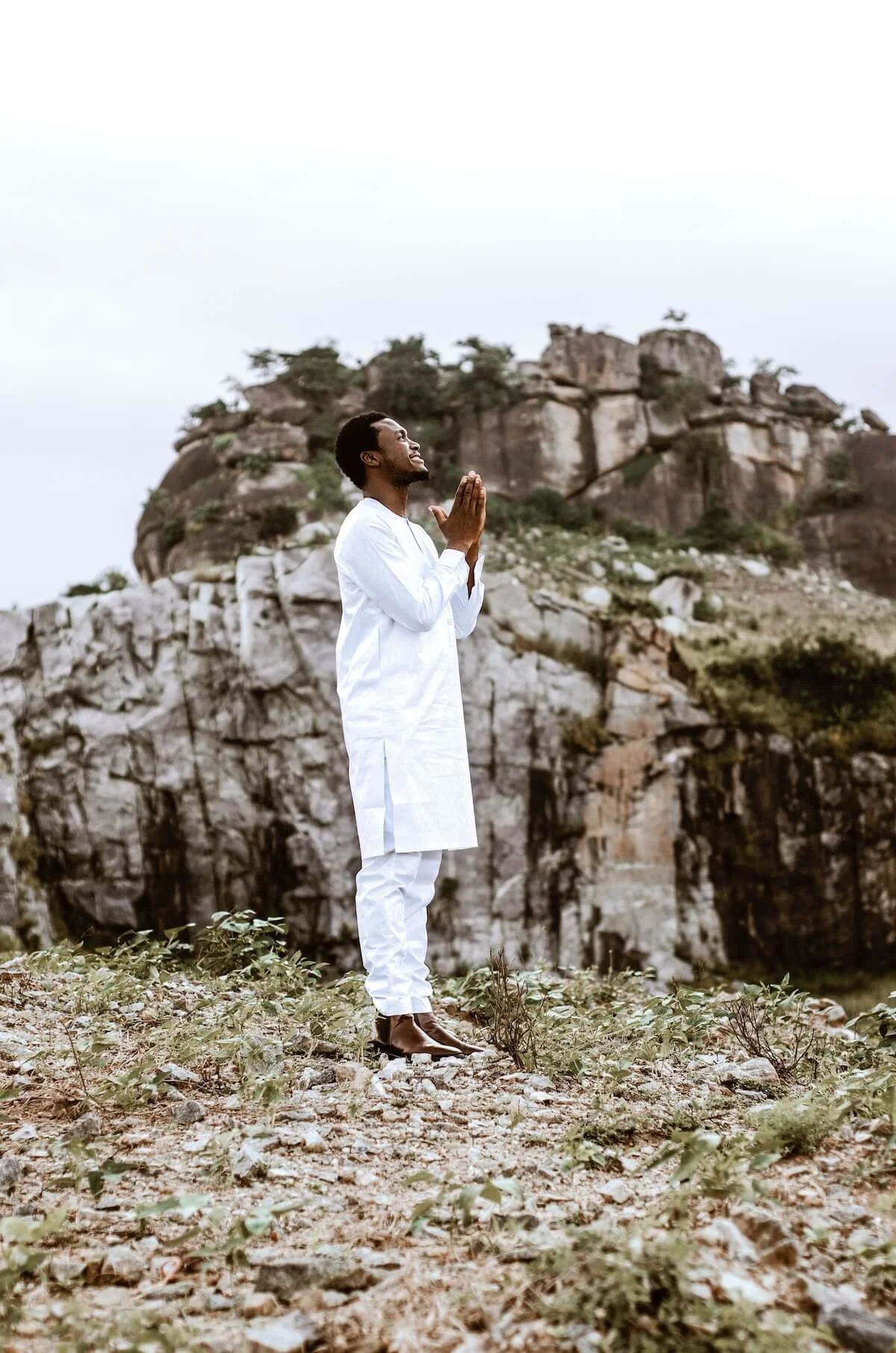
For Many People, Prayer is a Source of Comfort, Connection, and Meaning.
It can offer peace during uncertainty, hope during grief, and a way to feel grounded in something larger than ourselves. In religious trauma therapy, this is often where the conversation begins.
But for others, prayer slowly becomes something different.
Instead of creating peace, it becomes driven by fear.
Instead of feeling like a choice, it feels like an obligation.
Instead of creating connection, it becomes another way to manage anxiety.
If you grew up in a high-control religious environment, you may find yourself praying in ways that don't feel voluntary anymore. You might pray repeatedly to make sure you "said it right." You may feel compelled to confess every intrusive thought, ask for forgiveness dozens of times a day, or pray until the anxiety finally eases. You may fear that stopping, even for a moment, could invite punishment, tragedy, or separation from God.
This doesn't necessarily mean there is something wrong with your faith.
It may mean your nervous system learned that prayer was necessary for survival.
When Faith Becomes Fear
High-control religious systems often teach that every thought, feeling, or action has eternal consequences. Children and members may hear messages like:
"If you don't confess every sin, you'll lose your relationship with God."
"Your prayers protect the people you love."
"If something bad happens, ask yourself whether you've displeased God."
Over time, these messages teach the brain to associate safety with spiritual rituals.
The nervous system begins asking a different question.
Not, do I want to pray?
But, what if I don't?
Research on trauma helps explain why this happens. When our brains repeatedly experience fear, they become wired to look for danger and ways to reduce it. The amygdala becomes more sensitive, while anxiety relief strengthens whatever behavior temporarily makes the fear go away. Even if the relief only lasts a few minutes, the brain remembers it.
Prayer can unintentionally become part of that anxiety cycle.
This doesn't make prayer unhealthy.
It means anxiety has attached itself to something that once felt sacred.
Prayer Can Become a Safety Behavior
Religious trauma therapists often talk about safety behaviors, actions people use to reduce anxiety or prevent feared outcomes. These behaviors can provide temporary relief, but they also teach the brain that the danger must have been real in the first place.
Someone with religious trauma may find themselves:
Repeating prayers until they feel "perfect."
Confessing the same mistake over and over.
Constantly asking God for reassurance.
Praying to prevent terrible things from happening.
Feeling unable to sleep without completing a certain prayer routine.
Believing a skipped prayer could bring guilt, punishment, or harm.
For some people, these patterns overlap with Religious OCD, also called scrupulosity. Researchers and clinicians, including Dr. Jonathan Abramowitz, have written extensively about how obsessive-compulsive symptoms can become centered around religion, morality, or spirituality. In these cases, the goal is rarely greater faith. It is relief from overwhelming anxiety.
That's an important distinction.
Healthy spiritual practices are generally rooted in relationship, meaning, and personal choice.
Compulsive spiritual practices are driven by fear.
Your Body May Be Following Old Rules

One of the most confusing parts of healing is realizing that your body may still respond as though you're living inside the environment that taught these fears.
Even if you no longer believe those teachings intellectually, your nervous system may continue reacting automatically.
You skip your nightly prayer.
Your heart races.
You feel guilty.
You wonder whether you've made a terrible mistake.
The anxiety itself can feel like proof that you need to pray.
But trauma researchers like Dr. Bessel van der Kolk have shown that our bodies often remember danger long after our minds understand we are safe. Healing involves helping the nervous system learn new experiences, not simply replacing old beliefs with new ones.
This is one reason leaving a high-control faith tradition can feel so disorienting.
The fear isn't just cognitive.
It's embodied.
Healing Isn't About Praying Less
Many people worry that healing from religious trauma means giving up spirituality altogether.
It doesn't.
For some people, healing includes rebuilding a deeply meaningful faith.
For others, it means letting go of religion entirely.
Many find themselves somewhere in between.
The goal isn't deciding what you should believe.
The goal is recovering the freedom to choose.
Healing involves reclaiming agency after environments that taught obedience over self-trust. Healing allows spiritual practices to become invitations instead of requirements.
Imagine the difference.
You pray because you want connection.
Not because you're terrified of what will happen if you don't.
That shift changes everything.
Learning to Listen to Your Anxiety Differently
As healing begins, many people notice an uncomfortable reality.
The anxiety often gets louder before it gets quieter.
If you've always responded to fear by immediately praying, confessing, or seeking reassurance, choosing not to perform the ritual can feel unbearable at first. The nervous system interprets the change as dangerous because it has learned that the ritual kept you safe.
This doesn't mean you're doing something wrong.
It often means your brain is learning something new.
Rather than asking, "How do I make this anxiety disappear?" therapy may gently explore different questions.
What is this fear trying to protect me from?
Whose voice am I hearing?
Do I actually believe this, or did I learn to fear it?
These questions create space for curiosity instead of urgency.
Over time, the body begins to recognize that uncertainty can be survived without compulsive rituals.
Healing Your Relationship With the Sacred

Religious trauma therapy isn't about telling people what to believe.
It is about helping people separate fear from faith.
Many survivors discover that beneath years of anxiety, guilt, and hypervigilance is a quieter relationship with themselves, and sometimes with spirituality as well.
One built on trust rather than terror.
Rooted in curiosity rather than certainty.
Grounded in love rather than fear.
If prayer has become something you feel forced to do instead of something that nourishes you, you are not alone. Your compulsive spiritual habits may not reflect the strength of your faith. They may reflect the ways your nervous system learned to survive.
Healing is possible.
With compassion, trauma-informed care, and a deeper understanding of how anxiety, attachment, and the nervous system work together, it becomes possible to loosen fear's grip. Whether you choose to reclaim your faith, redefine it, or walk a different path entirely, healing invites you to make those decisions freely, not because fear demands them, but because they genuinely reflect who you are becoming.
That freedom is often where healing truly begins.
Can Religious Trauma Therapy in St. Paul, MN Help You Reclaim Prayer as a Choice?
When you've survived a high-control religious system, prayer can stop feeling like connection and start feeling like an emergency. You might repeat the words until they feel "right," confess the same thought again and again, or feel your heart race when you try to skip your nightly routine. These patterns aren't signs of weak faith; they're your nervous system remembering that rituals once kept you safe. Your religious trauma therapist in St. Paul, MN will help you begin to untangle fear from faith, noticing how guilt, hypervigilance, and the need for certainty still live in the body. Together, you'll practice tolerating uncertainty without compulsion, so that spiritual practice can become an invitation rather than an obligation.
This work isn't about praying less or giving up your beliefs. It's about recovering the freedom to choose, one regulated breath and one small moment of presence at a time. At NobleTree Therapy, sessions move at the pace your nervous system can handle. We honor how trauma shapes the body's relationship with the sacred and use gentle, body-based practices to help you separate what you genuinely believe from what you were taught to fear. Slowly, you begin to experience a quieter relationship with yourself and with spirituality—one built on trust rather than terror.
Let's connect—schedule a free consultation
Learn more about religious trauma therapy at NobleTree
You don't have to pray from fear. Freedom can begin here.
Other Therapy Services Offered at NobleTree Therapy in St. Paul, MN
At NobleTree Therapy, we walk alongside individuals, couples, and families across Minnesota who are tending to the slow, tender process of healing—especially when faith communities, family systems, or past relationships taught them that fear was the price of belonging. Religious trauma therapy in St. Paul, MN, is one way we help people separate compulsion from choice and fear from faith, but it's not the only path we offer toward rebuilding a sense of inner steadiness and freedom.
In addition to religious trauma therapy, we offer LGBTQIA+ affirming care, somatic couples therapy, companionship in forms of grief that don't always have a clear name, and space for identity or creative exploration. Whether you're unlearning old spiritual rules, noticing the places your body still braces when you skip a ritual, or wondering what it means to practice faith from love instead of terror, our work honors your complexity, your resilience, and a pace of healing that never requires you to rush.
About the Author

Kendra Snyder, MA, LMFT, NCC (she/her) is the founder of NobleTree Therapy and a licensed trauma therapist serving Minnesota and Colorado. For more than a decade, she has supported individuals and couples healing from relational trauma, spiritual wounding, and the fear-based patterns that high-control environments leave behind. Grounded in somatic, depth-oriented, and attachment-focused approaches, her work invites people to slow down, attune to their bodies, and gently explore the places where guilt, hypervigilance, or compulsion still live. Kendra's practice is especially attuned to those healing from religious trauma, scrupulosity, and identity fragmentation—including LGBTQIA+ individuals, adoptees, and anyone working to reclaim a sense of self beyond the fears they were handed.
In her religious trauma therapy in St. Paul, MN, Kendra helps people understand how the nervous system learns to associate safety with spiritual rituals, and how prayer, confession, or reassurance can quietly become ways to manage anxiety rather than expressions of genuine faith. She believes that freedom isn't restored by deciding what you should believe, but through curiosity, self-trust, and the slow work of separating what nourishes you from what once kept you afraid. Her approach reflects a deep respect for the embodied process of moving from fear into freedom—learning to pray, or not pray, from a place of choice rather than terror.